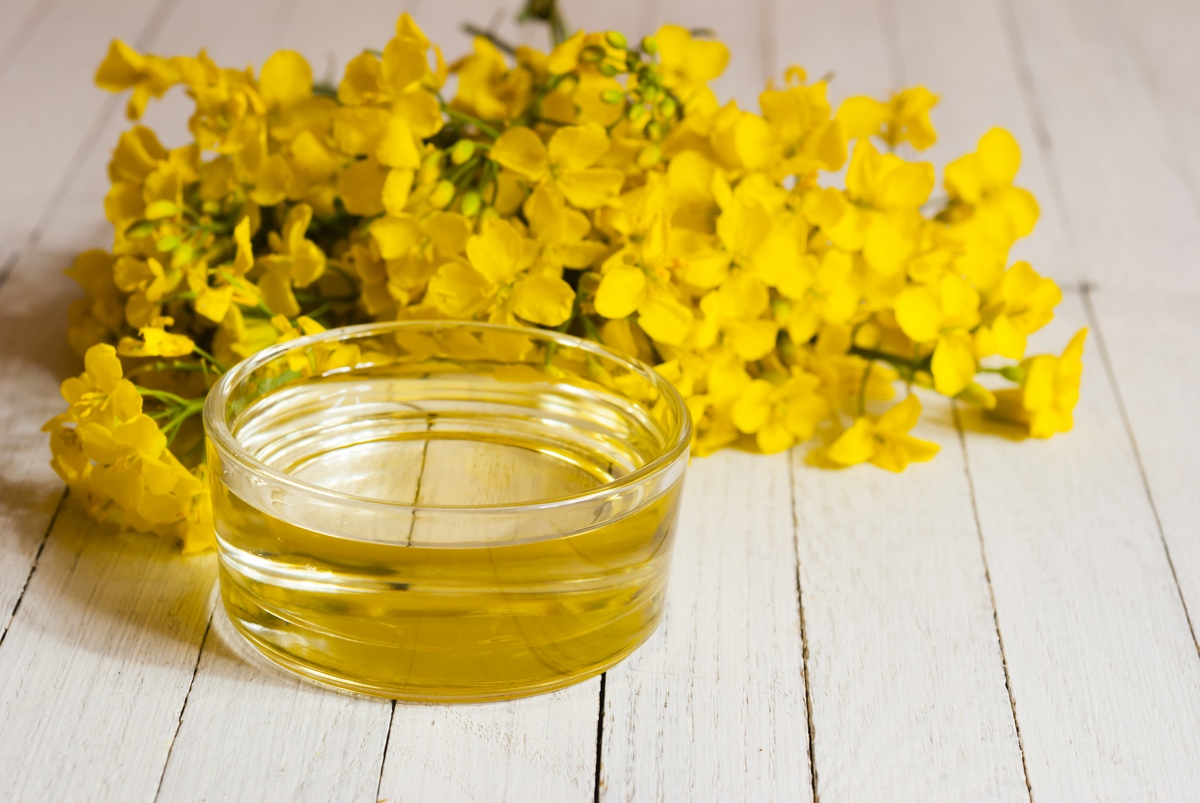
Rapeseed Oil
Rapeseed oil is of vegetable origin and is obtained from crushed rapeseed by pressing or extraction. It is a light yellow to brownish yellow oil. Rapeseed oil is one of the most important vegetable oils.
For centuries, humans and animals could not consume rapeseed oil, as it had high Uric acid content. However, rapeseed varieties are now available for cultivation which has lower Uric acid content.
The acid value of oil may be used as a measure of quality. However, the acid value of the oil must not be too high, as this denotes an excessively high content of free fatty acids, which causes the oil to turn sour. Discolouration may also occur. Rapeseed oil should have an acid value of at most 0.6 - 2.0%.
Oils and fats spoil by readily becoming rancid. Rancidity is promoted by light, atmospheric oxygen and moisture and leads to changes in odour and taste. Thus, the tanks and barrels must be filled as full as possible, taking into consideration the coefficient of cubic expansion (see Density), so that as little ullage space as possible is left above the cargo. Do not load rancid oil, since it does not meet quality requirements.
Do not accept for loading rapeseed oil contaminated by ferrous and rust particles or by seawater.
Subject to compliance with the appropriate temperature ranges, duration of storage is not a limiting factor as regards transport and storage life.
Rapeseed oil is used as edible oil, machine oil and in the production of margarine and soap. It may also serve as a substitute for diesel fuel (biodiesel).
OTHER RANGES INCLUDE THE FOLLOWING:
main Exports
Products Details